
Albums | European Roulette Online UK Certified: A Comprehensive Review
Posted by Spice on February 5, 2026
If you are a fan of online casinos and enjoy playing European roulette, then you have come to the right place. In this article, we will take an in-depth look at European roulette online UK certified, providing you with all the information you need to know before placing your bets.
What is European Roulette Online UK Certified?
European roulette online UK certified is a popular variation of the classic casino game that has been certified for use in the United Kingdom. This means that the game meets all the necessary requirements and standards set by the UK Gambling Commission, ensuring a fair and secure gaming experience for players.
One of the key features of European roulette is the presence of only one zero on the wheel, giving players better odds compared to the American version of the game. This makes European roulette a favorite among players looking for better chances of winning.
Top Casinos to Play European Roulette Online UK Certified
| Casino Name | Owner | License | Territories |
|---|---|---|---|
| 888 Casino | 888 Holdings PLC | UK Gambling Commission | United Kingdom |
| LeoVegas | LeoVegas Gaming Ltd | UK Gambling Commission | United Kingdom |
| William Hill | WHG International Limited | UK Gambling Commission | United Kingdom |
Advantages of https://mpbandb.co.uk European Roulette Online UK Certified
- Better odds with only one zero on the wheel
- Certified for use in the UK, ensuring fairness and security
- Wide range of betting options for players of all levels
- High-quality graphics and immersive gameplay
How to Play European Roulette Online UK Certified
Playing European roulette online UK certified is easy and straightforward. Simply place your bets on the table and watch as the wheel is spun. If the ball lands on a number or color you have bet on, you win! It’s that simple.
Comparative Table: Devices for Playing European Roulette Online UK Certified
| Device | Compatibility |
|---|---|
| Mobile Phones | Yes |
| Desktops | Yes |
| Tablets | Yes |
Pros and Cons of European Roulette Online UK Certified
Pros:
- High-quality graphics and immersive gameplay
- Certified for use in the UK, ensuring fairness and security
- Better odds with only one zero on the wheel
Cons:
- Limited variations compared to other roulette games
- Some players may find the betting options too complex
Checking the Fairness of the Game
When playing European roulette online UK certified, it is important to ensure that the game is fair and unbiased. Here are some tips on how to check the fairness of the game:
- Look for casinos with a valid UK Gambling Commission license
- Check for independent audits and certifications
- Read reviews from real users to gauge the reputation of the casino
By following these simple steps, you can ensure that you are playing European roulette online UK certified in a safe and secure environment.
Overall, European roulette online UK certified offers players a thrilling and rewarding gaming experience. With better odds, high-quality graphics, and a range of betting options, this variation of roulette is a top choice for players looking for a fair and exciting game. So why not give it a spin today and see if luck is on your side!
Albums | Cheapest DeFi Bridges and Why Cross-Chain Aggregators Are the Unsung Heroes
Posted by Spice on January 9, 2025
Whoa! The noise around cross-chain transfers gets louder every month. Seriously? Yes. Fees, failed txs, and slow confirmations stack up like unpaid parking tickets. My instinct said this space would calm down by now, but nope — it’s messy and fast. Here’s the thing. Users want cheap, reliable routes. They want predictability. They want to move assets without losing half the transfer to fees or getting stuck on chain bridges that look trustworthy until they aren’t.
Okay, so check this out—I’ll be candid. I’m biased, but cheaper isn’t always better if the tradeoff is safety. Hmm… many bridges promise rock-bottom fees. Some hit you with price slippage or wrapped assets that are hard to redeem. Initially I thought the market would simply pick winners by cost. But then I realized that trust assumptions, liquidity fragmentation, and UX are equally decisive. Actually, wait—let me rephrase that: low fees attract attention, though reliability keeps users. There, that’s clearer.
Let’s cut through marketing. Cheap bridges fall into three practical categories: native canonical bridges (simple but sometimes centralized), liquidity-pool bridges (fast but can be costly if liquidity is thin), and aggregator-led routes (smart, often cheapest, but dependent on many moving parts). On one hand, canonical bridges reduce complexity. On the other hand, aggregators stitch many pools and chains together to find the least costly path, though actually aggregators can amplify counterparty risk if not audited well. This is why cross-chain aggregators are often underrated—they save cost by combining liquidity across multiple venues.

Why cheapest doesn’t mean best
There’s a cognitive bias here. People equate low fee with smart choice. That’s natural. But fees are only one axis. Security assumptions differ. Some bridges rely on a multisig that’s effectively centralized. Others use light clients or fraud proofs. Those choices change the risk profile. Somethin’ subtle is at play: a $1 fee with a 0.1% chance of losing funds is not the same thing as a $5 fee with strong guarantees. Traders often ignore probabilistic outcomes when they see a low absolute cost. Funny, but true.
Also, UX friction matters. If a bridge requires manual unwrapping, long waits, or multiple approvals, the “cheap” option becomes expensive in time and effort. People value time. People value clarity. Time is money, literally and figuratively. I’m not 100% sure about the exact dollar value for each user, but for active traders small delays destroy strategies.
How aggregators find the cheapest route
Aggregators use smart routing logic that evaluates on-chain liquidity, slippage, and gas. They can split a transfer across multiple pools to minimize price impact. On paper this is elegant. In practice you have to watch oracle timing, front-running risks, and router contracts. Initially I thought routing was just about math. But then I realized that timing and real-time liquidity shifts are part code, part market psychology.
Consider a cross-chain swap from Ethereum to BSC. A naive approach: lock tokens on chain A, mint on chain B. A smarter aggregator might route A?Polygon?BSC, leveraging deep pools on Polygon to reduce slippage. That can cut costs. Yet each hop increases complexity. Multi-hop saves fees, though it raises composability risk. On one hand you save a bunch on fees; on the other hand you now trust more contracts. Tradeoffs everywhere.
When to trust a bridge or aggregator
Look for a few simple signals. Short list: audited code, meaningful TVL, active bug bounty, and clear governance. Also check withdrawal timelines and the custodial model. Non-custodial designs with on-chain validator sets and proven proof-of-reserve are better. However, audits aren’t a silver bullet. Audits find issues, but they don’t guarantee flawless operation. Human error and economic-exploit vectors persist.
I’m biased toward designs that minimize centralized control. That’s my preference. It bugs me when teams hide behind marketing language that sounds decentralized while maintaining keys. Be wary of bridges that are very very cheap up front but opaque about the multisig or oracle setup.
Practical checklist for cheapest-but-safe transfers
Short checklist. Quick wins first. Check transaction previews. Compare total cost including on-chain approvals. Look at historical transfer times. Confirm the supported token’s canonical status. Use wallets with integrated route comparison. And if you want a single place that often shows competitive routes and a clean UX, consider checking out relay bridge — it’s worth a look as a low-friction aggregator option.
Note: the cheapest path can change within seconds. That is market microstructure. So automated routing is helpful. But automation can fail spectacularly if route selection is based on stale data. On a good day, aggregators outperform manual routing by cutting slippage and aggregating depth. On a bad day, oracle lag or mempool squeezes can produce ugly losses. So monitor trades closely.
Cost components you should know
Gas is obvious, though its impact varies across chains. Native token swaps add bridging fees. Slippage can be the silent killer. Conversion fees and token wraps add hidden costs. Some bridges also tack on “protocol fees” for routing. You want the full effective cost, not just the headline fee. That’s my main gripe with many interfaces—they show the gas estimate and the protocol fee separately, then surprise you at settlement. Annoying.
Another hidden factor: one-sided liquidity. If a pool lacks depth on one side, routes that look cheap will eat liquidity and spike slippage. Aggregators try to split orders to avoid this. That’s clever. But splitting increases the number of transactions and thus cumulative gas. There’s tradeoff math here. The optimal split depends on gas vs slippage ratio. Nerdy? Sure. But it matters for big transfers.
Real-world patterns I’ve observed
Many users start on the cheapest bridge, then migrate to safer alternatives after a bad day. Some will accept higher fees for convenience and speed. Others chase low-cost routes like coupon hunters—always searching. On one hand, price sensitivity drives innovation. On the other hand, it encourages marginal players to compete primarily on price, sometimes cutting corners. That dynamic compresses margins and sometimes corners safety.
Policy and regulation add another layer. US-based users should be mindful of compliance risk when routing through unknown bridges. Rules will continue to evolve. That uncertainty affects liquidity providers and thus the ultimate cost model.
FAQ
How do I find the cheapest bridge without sacrificing safety?
Compare route previews across aggregators, check audits and TVL, and prefer non-custodial designs. Also estimate total cost: gas + slippage + protocol fees. If something is far cheaper than competitors, ask why. Sometimes cheap equals subsidized, and subsidies can disappear suddenly.
Are aggregators always cheaper than single bridges?
Not always. Aggregators can be cheaper by slicing orders and tapping deeper liquidity, but they add complexity. In low-liquidity markets a single trusted bridge might be more predictable. Watch for stale quote vulnerabilities when using aggregators.
What are safe practices for large transfers?
Split transfers into smaller chunks, use well-audited paths, time transfers during stable market periods, and monitor mempool conditions. Always confirm token contract addresses and be cautious about wrapped tokens you cannot easily redeem.
Hip-Hop, Rap | Daye Jack – Trapped In Love
Posted by admin on July 16, 2014
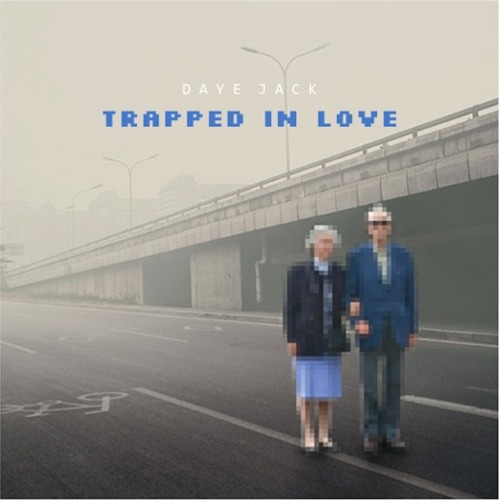
Daye Jack is not a typical rapper. His story is unique. At only 18 years old Jack has an incredible amount direction and self-assuredness. He has honed his skills and knows his weaknesses more than your average teenager. With only one full body of work under his belt, there is plenty of room for growth and “Trapped In Love” is a fascinating, personal and beautiful step towards realizing that full potential.
Take a listen below, and get accustomed to a voice you will be hearing plenty more from in the future.
Chill, Indie | Prelow – For The Team
Posted by admin on January 22, 2014

After a semi-intelligent child turned me on to their music a few weeks back, I have been absolutely hooked on Prelow. The mysterious band has only one public track on their SoundCloud, but the heavily-produced indie tune “For The Team” has me begging to hear more.
Lead vocalist, Jesse Aicher, whispers sweet nothings in to your ear as the song progresses. His soft, melodic voice complementing the hazy electronic instrumental to make a sound unlike much of what I have heard coming out of the indie genre.
The duo, although seemingly new to the scene, clearly has a natural cohesion, and a knack for making intriguing music. I encourage you all to check out Prelow’s “For The Team” and stay tuned for more from the NYC-based group.
Bass, Trap | Enur Ft. Natasja – Calabria 2007 (The Clerk Rmx)
Posted by Mach on December 17, 2013
 “Calabria” was one of my go to tracks back in the days when I was still learning what EDM was. The Clerk went into this and completely evolved it into a sawg-bass, traptastic jam. I would love to hear this blasted in a packed basement, no doubt everyone would be bumping out to this til the sweat shorted out the speakers.
Free Download: Enur Ft. Natasja – Calabria 2007 (The Clerk Rmx)
Pop, Videos | Jon Bellion – The Making Of Ungrateful Eyes (Behind The Scenes)
Posted by Grubeats on September 24, 2013
[do action=”youtube” videoid=”he_WQcIYM3M”/]
There aren’t many things on this earth that I enjoy as much as Jon Bellion’s music. A loaded double bacon cheeseburger from Five Guys, a shampoo from the fine Asian woman at Supercuts, or my bar tab on some random dude’s card are a few exceptions. In addition, a look behind the scenes into JB’s creative process often trumps the final musical product. Why? You can’t appreciate a sound like Jon’s without seeing the process from start to finish. What goes on in Bellion’s head is a mystery; a ‘beautiful mind’ indeed.
Enjoy the above video of Jon producing his recent record, “Ungrateful Eyes” fro scratch in the studio. While it seems I’m not the only one who enjoys these videos, Jon will be releasing these for each single leading up to the release of his highly anticipated fall album.
Dubstep | MNRS – Arms (Virtual Riot Remix)
Posted by BP on September 9, 2013

I’m sure some of you heard some of the other remixes of “Arms” by MNRS by Olugbenga and Cats Hero many months ago, and now 19 year old German producer Virtual Riot has put out his version for MNRS’s “Arms (Single & Remixes)” EP official release this last week! Virtual Riot was the only one to take a dubstep spin on the track, and his exciting, bass-filled version is such a fun listen. It keeps the cool indie pop vibes of the original while adding the deep bass and growls us dubstep lovers crave. The EP is now available on US, UK, and German iTunes!
iTunes: MNRS – Arms (Virtual Riot Remix)