
Why I Keep Coming Back to Solscan: A Practical Guide to Token Tracking on Solana
Posted by Spice on May 21, 2025
Whoa!
I remember the first time I pulled up a Solana tx and felt oddly satisfied.
The page loaded fast, the details were obvious, and my gut said this was gonna save me time.
Initially I thought the on-chain view would be cluttered, but then I realized how clean and useful the layout actually is.
That first impression stuck with me, and honestly, it’s part habit now and part toolkit—somethin’ I reach for when things get weird on chain.
Seriously?
Yes—because not all explorers are made equal.
Most show raw data and leave you squinting.
Solscan parses Solana the way a good barista pulls espresso: fast, efficient, and with purpose.
On the other hand, you still need to know what to look for, and the labels aren’t foolproof, though for the most part they’re very helpful when tracking tokens and program interactions across accounts that are otherwise inscrutable.
Hmm…
My instinct said to treat token pages like accounting ledgers.
They list holders, transfers, supply figures, and token metadata in one place.
When a token starts acting funky, the holder list and transfer history often tell a story before the PR teams weigh in.
On a deeper level, solscan gives you a token’s life-history view that, if you read it right, shows mint events, freeze authority moves, liquidity injections, and sometimes patterns that hint at wash trading or manipulation.
Whoa!
Using a token tracker is simple but powerful.
You paste a mint address into the search bar and immediate context appears.
Under the hood, you’re seeing program accounts, associated token accounts, and instruction decodes that help you figure out who did what, when, and sometimes even why.
The trick is cross-referencing holder concentrations with transfer spikes and, if needed, following programs called by transactions to their ledger traces—which Solscan surfaces nicely even when the paths are convoluted.
Seriously?
Yes—there are clever features most folks miss at first.
Transaction decoding shows inner instructions and SPL token movements without jumping between tabs.
You can also inspect signatures, check confirmations, and see cluster health all from the same window.
When you’re troubleshooting a failed swap or trying to verify a suspicious mint, these conveniences save you several rounds of guesswork and screen-scrubbing.
Whoa!
Sometimes I get obsessive about token holder charts.
They reveal concentration risk in one glance, and they let you spot whales moving out, which often precedes price drama.
I’ll be honest: token pages can be misleading if you don’t consider wrapped or custodial accounts, so use them as a guide not gospel.
My bias is toward skepticism—if one account holds 80% of supply I assume there will be volatility and plan accordingly, though actually that sometimes means the project is early and risky rather than malicious.
Hmm…
There’s value in the more technical reads too.
Solscan exposes program logs and runtime errors that are otherwise buried in RPC responses.
For devs debugging a program or auditors verifying behavior, that transparency cuts hours off a troubleshooting session, especially during airdrops or program upgrades.
On the analytic side, you can export CSVs of transfers, aggregate them, and slice data by time windows to uncover patterns in token distribution or usage that dashboards often wash out.
Whoa!
My instinct still misses stuff sometimes.
So I cross-check with other explorers and sometimes node-level RPC queries when stakes are high.
But for day-to-day token tracking and quick audits, solscan is usually the fastest route from confusion to clarity.
It balances depth and readability in a way that helps both power users and casual holders understand account relationships and token mechanics without getting lost in raw hex dumps.
Really?
Yes—the visualizations matter.
Holder percentile charts, transfer timelines, and supply breakdowns give context you can’t get by eyeballing raw transfers.
When you combine those visuals with the transaction list and program labels, you start to see narrative arcs—like when liquidity providers quietly exit before a rug.
That said, visuals can seduce you into overconfidence; sometimes charts smooth the spikes away and hide microstructure, so keep an eye on raw transfers too.
Whoa!
Here’s the thing.
Security features like address labeling and suspicious activity flags help, but they aren’t perfect.
You must still use judgment—labels are community- and algorithm-driven, and they sometimes lag or misclassify.
On balance, solscan gives you the signals you need, but it doesn’t replace careful due diligence or cold-wallet verification when money’s involved.
Hmm…
For builders, there are a few underrated bits.
Program accounts showing rent-exempt balances, bloom filters, and account sizes are visible without digging into docs.
If you’re deploying an SPL token, you can watch mint authority moves and freeze authority changes in near real-time, and that practical oversight is priceless during token launches and airdrops.
And if you care about validator or block-level metrics, those are readable too—stake accounts, epoch snapshots, and recent block reward distributions are all available without wrestling RPC responses.
Whoa!
I have a pet peeve though.
Some token metadata still points to broken off-chain URLs or outdated IPFS hashes, and that bugs me when verifying NFT utilities or token imagery.
But solscan surfaces the issues so you can follow the chain to the source and call it out, which helps the community, even if the fix upstream takes time.
I’m not 100% sure every token will fix those links, but at least the visibility makes it easier to decide whether to trust a project or walk away.
Seriously?
Absolutely—tracking is proactive not reactive.
Set up token watchlists and notifications and you’ll catch anomalies sooner.
That saved me time many times when big transfers happened off-hours and I wanted to know if a whale was warming up.
Also, for compliance-aware teams, exportable histories and labeled transaction trails make reporting and audits much less painful than reconstructing activity from raw RPC logs.
Whoa!
Okay, so check this out—if you want to try it right now, start with a known token and learn the layout.
Open the holders tab, scan the top 10, look at transfer spikes, then check program calls on the top movements.
If something looks odd, copy the account and search it again to see interactions across other tokens and programs—patterns emerge fast.
When you’re ready, bookmark the explorer and consider leaving comments or labels when you verify suspicious accounts; community tagging is part of how explorers get smarter.
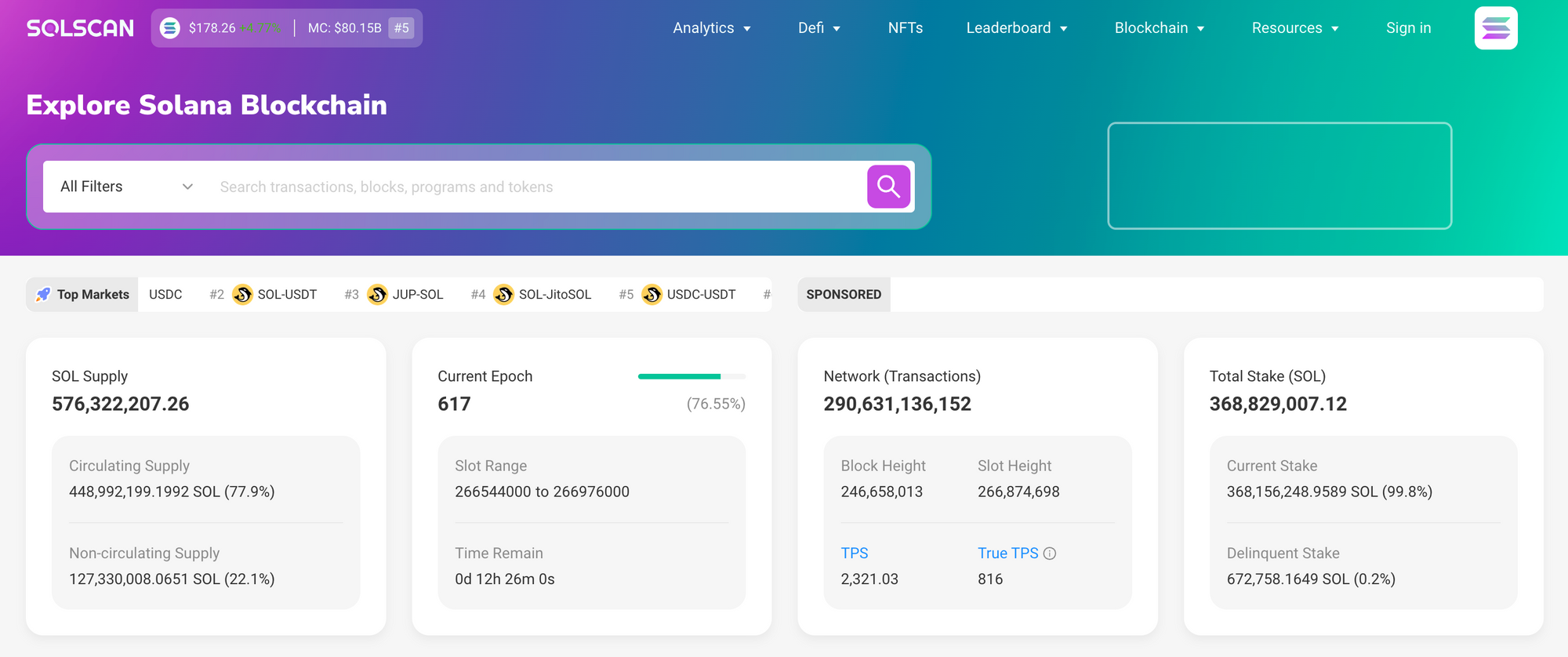
How I Use solscan When Tracking Tokens
I use it as my first-pass triage tool: check mint and holders, inspect transfers, read tx decodes, and then follow programs that get invoked.
If a token launch is happening, I monitor mint and freeze authority moves, watch liquidity entry via known pool addresses, and keep an eye on top-holder churn.
Sometimes the labels mislead or lag; that’s why I pair this with wallet-level checks and occasional RPC queries to confirm edge cases.
Mostly though, solscan speeds up the mundane parts of chain analysis so I can focus on the weird bits that actually need human judgment.
FAQ
Q: Can I trust the holder percentages on token pages?
A: They are a reliable starting point, but treat them as indicative not definitive.
Look for custodial or exchange addresses, wrapped assets, and program-owned accounts that can inflate or distort apparent concentration.
If precision matters, dig into each top account to see what it really represents.
Q: Does solscan support NFT metadata verification?
A: It shows on-chain pointers and sometimes previews metadata, but off-chain links can be broken or outdated.
Use the explorer to find the metadata URI, then verify the IPFS hash or server response independently if authenticity matters for purchases or grants.
Q: Is there a mobile-friendly workflow?
A: The interface is responsive enough for quick checks, but for deep dives you’ll want a desktop browser.
Notifications and watchlists mitigate the need to stare at pages all day though, so set alerts for the tokens you care about.
Okay—I’ll wrap up without a boring recap.
Solscan is not magic but it is very practical; it gives you clarity and context, and if you use it the way experienced users do you’ll avoid a lot of dumb mistakes.
If you want a direct link to check features and try token tracking yourself, try solscan.
I’m biased, sure, but I’ve found it worth the bookmark.
Now go poke at a token and see what story the chain tells—you might be surprised by what you find… really.
Tags: watch
+